




Drones are rapidly becoming a more common sight on Australian farms, particularly for spraying tasks.
But when it comes to monitoring, many producers are still unsure how to use drones to their full potential. Most have only used them for manual visual checks, flying out to inspect a water point or scan a paddock, often without structure or follow-up.
That’s where autonomous systems offer a meaningful step forward. By automating both the flight and the analysis, they reduce labour burden, cut operational risks, and ensure critical issues aren’t missed due to distance, time, or fatigue.

One of the most immediate benefits of autonomous drone monitoring is consistency. Unlike ad hoc visual checks, these systems follow pre-planned routes and capture structured data every time. For example, drones can autonomously scan paddocks to count livestock, check water points, or detect broken fences. These tasks are completed in a fraction of the time it takes to do manually and with greater accuracy.
After all, unlike people, drones don’t get tired, distracted, or miss things in the dust and heat.
On some properties, staff spend two to six hours a day on manual checks, often costing hundreds of dollars in time, fuel, and vehicle wear, even when little needs attention. These systems deliver a clearer, more reliable view of what’s happening across the property and help farmers make faster, more informed decisions.
For large-scale cattle operations, the cost of sending ground teams or helicopters to locate or muster cattle is significant. A single helicopter run can cost upwards of
$1,000 per hour, with limited flexibility or frequency. Drones offer a safer and more affordable alternative, able to scan vast areas at a fraction of the cost and without the fuel, crew, or risk.
On smaller farms, the challenge is often one of time and capacity. Many producers work alone or in small teams, and spending hours each day driving between paddocks just isn’t sustainable. For these producers, a drone that can run routine checks while they handle other jobs can be transformative.
Autonomous drone systems now range from portable quadcopters, ideal for smaller properties, to long- range VTOL aircraft that can cover hundreds of hectares in a single flight. For advanced operations, drone-docks enable fully remote monitoring. These can launch and land missions on a schedule or in response to alerts, even when no one is on site.
 Monitoring doesn’t stop in the air. Ground-based cameras placed in yards, feedlots, and laneways can provide ML-powered livestock counting and basic health assessments, offering visibility in high-traffic or labour-intensive zones.
Importantly, this is not about replacing people. It’s about equipping farmers with better tools. These technologies provide timely, objective insights that support decision-making, improve safety, and reduce reliance on reactive management. They also create new opportunities to build data into everyday operations, strengthening resilience and helping producers plan ahead with confidence.
Autonomous monitoring is not just a technical upgrade. It represents the next step in how livestock operations will be managed: safer, faster, and more informed.
Edward Barraclough Founder/CEO Drone-Hand Pty Ltd

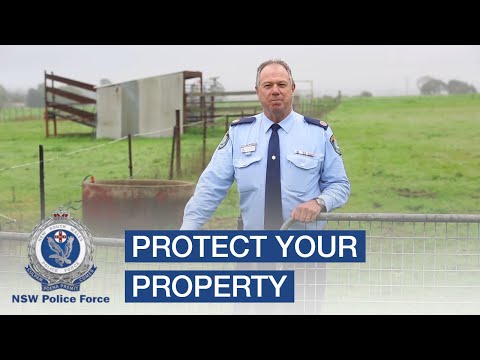
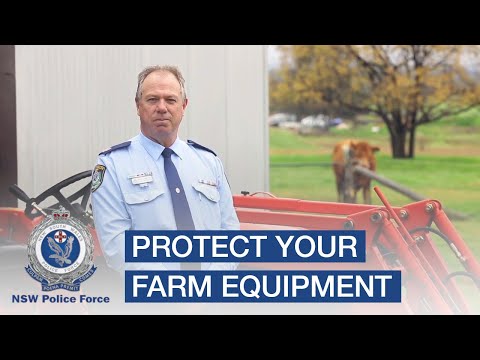
By Ann Brennan, Rural Crime Prevention Team, NSW Police Force
Rural crime is underreported and there is often a ‘she’ll be right’ approach towards it. Farmers face unique challenges when it comes to securing their property, such as, reduced internet connectivity, terrain, distance, technology, and resources.
As much as the NSW Police Force tries to deter and target rural crime offenders, the police cannot do it all on their own. There must be a joint approach from police and rural landowners, working together.
What can rural landowners do to increase their resilience against rural crime and make it harder for offenders?
Lock it up - Lock the house when you are not there. Lock the vehicle. Lock the shed. Lock the gate. Lock the fuel tank.
Watch it - Install security camera and monitoring systems. Have the images from the camera transmitted to a separate source so if the camera is taken the images are safe elsewhere.
Record it: Make sure your livestock management records are correct. Keep all your machinery details safely stored. Take photos of your livestock and equipment. Try to have something unique to your property in the background as proof it is on your land. (This can help at court, if required).
Mark it: Engrave your tools, machinery and equipment with your licence number or something unique to you. Make sure your livestock are tagged and have a National Livestock Identification Scheme (NLIS) device on them. Ensure you conduct NLIS PIC reconciliations on a regular basis.
There are various new technologies available to farmers to decrease the risk of criminals targeting their livelihood. Some examples include:
Rural crime offenders see rural landowners as vulnerable, easy targets and a low risk of them being caught. Let’s change that. We would like to encourage landowners to work with Police to increase the risk that the criminal will be targeted by the Rural Crime Prevention Team.


